April 2 – Celebrating Hans Christian Andersen’s Birthday and International Children’s Book Day

About the Holiday

Since 1967, April 2—Hans Christian Andersen’s birthday—has served as the date for International Children’s Book Day. The International Board on Books for Young People (IBBY), a non-profit organization founded in Zurich, sponsors the day to promote a love of reading and call attention to children’s books. National Sections of IBBY around the world alternate in hosting the event. The host for 2026 is Cyprus, and this year’s theme is “plant stories and the world will bloom.” Each year a prominent author and illustrator from the sponsoring country prepare materials for the event. This year’s poster was designed by Sandra Elephteriou. Elena Perikleous wrote this year’s message, and Giorgos Hatzipieris wrote this year’s official song, “The Little Gardener.” To learn more about the initiative and download digital materials, visit the IBBY website

Thank you to Levine Querido and Barbara Fisch at Blue Slip Media for sending me this book for review!

The True Ugly Duckling: How Hans Christian Andersen Became a Swan

Written by Sandra Nickel | Illustrated by Calvin Nicholls


“There once was a poor shoemaker’s son, who was tall and skinny. His nose was two times as long as everyone else’s and his heart two times as tender.” Thus begins not a fairy tale, but Sandra Nickel’s real life story of Hans Christian Anderson.

While most children spent their days working at the factory or going to school, Hans cut out costumes for his toys and invented stories that he performed for whomever would watch. Some neighbors gave him a few coins, but the factory workers and other children bullied and teased him. Hans “soothed his wounded heart by cutting out shapes from cloth.” At fourteen, knowing there was more for him in the world, Hans sailed alone for Copenhagen. There, he tried to find a place to express his talents, but each attempt ended in disappointment. Soon all his money was gone.

Illustration copyright © 2026 by Calvin Nicholls. Text copyright © 2026 by Sandra Nickel. Courtesy of Levine Querido.

When he sent a play to the Royal Theater, one director rejected it brutally, but another found a “few jewels” in it and arranged for him to go to school. At 17 Hans was taking classes for the first time. The other students laughed at him, and the headmaster dashed his dreams of becoming a storyteller, forbidding him to write. For six years Hans obeyed. “To comfort his heart, the boy cut out shapes from paper.”

Then one day when a girl asked him why her flowers had faded, Hans—now a young man—answered her by telling a story while cutting a scene in paper of hearts, dancers, flowers, and castles with working doors. The girl loved the story so much that Hans wrote it down and had it printed into a book. “The children of Copenhagen adored every word.” 

Illustration copyright © 2026 by Calvin Nicholls. Text copyright © 2026 by Sandra Nickel. Courtesy of Levine Querido.

Soon, Hans was telling and publishing more and more stories. Adults began reading them, and even Copenhagen royalty invited him to their castles for dinners and afterward to entertain the other guests by weaving “magic with his words and scissors.”

Back matter includes an Author’s Note recounting that experts now believe Hans Christian Andersen was likely on the autism spectrum and may also have had Marfan syndrome. She also discusses her choice to follow the story arc of The Ugly Duckling to depict Andersen’s life.

Illustration copyright © 2026 by Calvin Nicholls. Text copyright © 2026 by Sandra Nickel. Courtesy of Levine Querido.

Sandra Nickel’s mesmerizing and sensitive portrait of Hans Christian Andersen highlights his seemingly limitless creativity, imagination, and courage as he stays true to himself despite the treatment and rejections he endured. Her lyrical and moving biography is not only an inspiring tribute to this unique storyteller and artist, but a buoy for children struggling themselves and a reminder for all to embrace each person as a whole, recognizing and encouraging their talents, dreams, and contributions. Although his enduring popularity is already known to readers, her account of his ultimate triumph still has the power to astonish and prompt cheers.

Visually arresting, Calvin Nicholls’ extraordinary paper sculpture illustrations pop with action and emotion, immersing readers in the sights and sounds of Andersen’s factory hometown, his experiences in Copenhagen, and the joy of his long-dreamed-for success. The realism of Nicholls’ low-relief sculptures, assembled from various weight and textured papers then photographed, is astounding. Nicholls’ color scheme mirrors the theme of the “Ugly Duckling,” portraying Andersen in muted grays and browns until his full transformation when he dazzles Copenhagen royalty in a white tuxedo.

The True Ugly Duckling: How Hans Christian Andersen Became a Swan belongs in every classroom, school, and library collection to edify and inspire and would be an inspirational addition to home bookshelves, especially to pair with readings of his stories.

Ages 4 – 8

Levine Querido, 2026 | ISBN 978-1646146093

Hans Christian Andersen’s Birthday Activity

Easy Origami Swan


Kids can have fun on Hans Christian Andersen’s Birthday and International Children’s Book Day by making this easy origami swan to celebrate their unique personalities and talents! All you need is origami paper or you can cut your own 6-inch by 6-inch paper or any size square.

You can purchase The True Ugly Duckling: How Hans Christian Andersen Became a Swan from these booksellers

Amazon | Barnes & Noble | Bookshop

Picture Book Review

March 30 – National Take a Walk in the Park Day

About the Holiday

Take a Walk in the Park Day is as easy as it sounds, but getting outside and enjoying nature can make a profound impact on your emotional and physical wellbeing. Walking, whether on a paved path or testing your stamina on a rugged trail, provides many health benefits, and immersing yourself in the sounds and often surprising sights of wildlife going about their busy and playful lives brings joy and offers new perspectives and appreciation for the world around us. To celebrate today, visit a favorite or new local or state park with your family! 

Thank you to Yosemite Press for sending me a copy of this book!

Forest en Familia / El bosque en familia

Written by/Escrito por Cynthia Harmony | Illustrated by/ Ilustrado por Renata Galindo


While Emilia’s family waits for Abue Tita to arrive, Emilia and Papi finish packing up their lunch, including sweet and spicy tamarind treats, and Abuelo Beto’s treasured compass. Emilia and her family are going to forest en familia day at the big state park, and while her brother, Nico, is rarin’ to go, Emilia feels timid about being out in the wild. But soon—¡vámonos!—they’re off!

Illustration copyright © 2026 by Renata Galindo. Text copyright © 2026 by Cynthia Harmony. Courtesy of Yosemite Conservancy.

At the park gate, the friendly ranger hands Abue Tita a map. Emilia is captivated by the fresh scent of the pine trees. On the trail, their grandmother encourages them to “‘keep ears, eyes, and hearts open to sorpresas.” Emilia is ready! She loves surprises! And just then, a fluttery sorpresa finds her! Nico, running and leaping, discovers a little salamander on a mossy log. Then they all find more surprises everywhere they look.

Illustration copyright © 2026 by Renata Galindo. Text copyright © 2026 by Cynthia Harmony. Courtesy of Yosemite Conservancy.

After enjoying lunch under Abuelo Beto’s “favorite kind of tree,” they clean up “every wrapper and stray crumb. Then—¡Arriba!—climbing higher and higher on the trail, they come to the “biggest forest en famila sorpresa” of all. With “hearts wide open,” they gaze at the glorious panorama spread out in front of them. Back home, Emilia’s heart is full of the forest and all she’s seen.

This bilingual book presents the story in both English and Spanish side-by-side. Back matter includes a glossary, a prompt to find all the creatures in the illustrations and the answer key, and tips on making the most of a visit to public lands.

Illustration copyright © 2026 by Renata Galindo. Text copyright © 2026 by Cynthia Harmony. Courtesy of Yosemite Conservancy.

Cynthia Harmony’s lyrical and enchanting bilingual story will touch the hearts of all readers with its invitation to discover the surprises nature has waiting as well as its embrace of family traditions, culture, and remembrances. Through Emilia and Nico, Harmony positively recognizes that children embrace new experiences at their own pace, a welcome character arc in this inclusive story. Equally strong are the family connections, shown in Emilia’s packing both her and her brother’s favorite treats, the children’s close relationship with their grandmother, and the use of their abuelo’s keepsake compass along the trail. 

Renata Galindo’s charming illustrations combine realistic depictions of the forest with whimsical touches that sweep the family and readers up into the wonder of nature and its waiting surprises. Children will find joy in Galindo’s images of the family together—marveling over the wildlife they see, child and parent walking hand-in-hand, Nico nudging Emilia so she doesn’t miss seeing a hawk, a relaxing lunch break, and reliving the excitement of the day back home. 

Joyous and uplifting, Forest en Familia/El bosque en familia is the perfect book to introduce visits to public lands; local parks, trails and playgrounds; and even to spark nature discovery hunts in your own backyard. The close-knit family dynamics also makes this a warm and homey read for any story time occasion. The book is a must for all library collections, especially to accompany circulating nature backpacks or other such materials, and would be a favorite on home bookshelves as well.

Ages 4 – 8

Yosemite Conservancy, 2026 | ISBN 978-1951179397

About the Author

Cynthia Harmony is a bilingual children’s author and educational psychologist, originally from Mexico City. Her titles include Mi Ciudad Sings and Mi Ciudad Canta, Our World: Mexico, and the Charlotte Huck Honor-winner, A Flicker of Hope and Un Aleteo de Esperanza, which was selected as one of the best children’s books of the year by Kirkus and the American Library Association. She lives in Tucson, Arizona, with her family. Visit her at cynthiaharmony.com.

About the Illustrator

Renata Galindo is an art director, illustrator, writer. She is the author of three children’s books: The Cherry Thief, My New Mom and Me, and A Casa en Tres Idiomas, which have been translated into more than ten languages. Renata’s illustrations have been featured in exhibitions in Mexico, the U.S., and Italy, and she has created concept art, storyboard art, and layout design for animation, film, and television. She lives in Mexico City. Visit her at renatagalindo.com.

Take a Walk in the Park Day Activity

Nature Walk Scavenger Hunt 


While you’re out walking, look for the wildlife and other things in nature on this Scavenger Hunt or use the page without pictures to create your own list!

Nature Walk Scavenger Hunt with Pictures | Nature Walk Scavenger Hunt without Pictures

You can purchase Forest en Familia / El Bosque en Familia from these booksellers

Amazon | Barnes & Noble | Bookshop

Picture Book Review
March 26 – National Science Appreciation Day

About the Holiday

Launched in 2022 by Todd Stiefel, the founder and chair of ScienceSaves, Science Appreciation Day celebrates the power of science and scientific achievements. The holiday also raises awareness for the importance of critical thinking, thanks workers in the fields of science and medicine, and promotes the inclusion of science in public policy throughout the United States—and maybe even all over the world.” An appreciation for science begins early in life as children learn about their world and Earth’s long history through books like today’s stunning look at prehistoric times. To learn more about ScienceSaves and find resources for teachers and other educators from kindergarten through high school, visit ScienceSaves.org

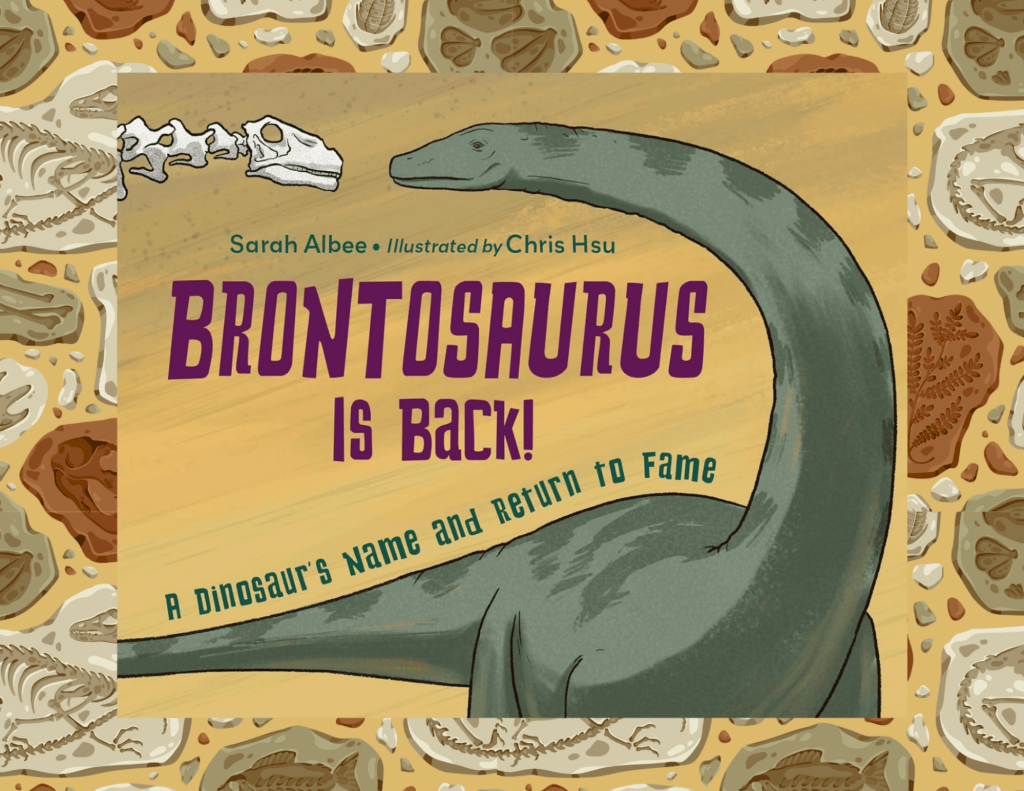
Our Prehistoric Planet: Dinosaurs and Other Creatures of the Past

Written by Sue Lowell Gallion | Illustrated by Lisk Feng


If you’re already a fan of Sue Lowell Gallion and Lisk Feng’s Our World collection of astounding books, you’re going to be excited about their newest one. If you’re new to this series of books, get ready to be amazed! Our Prehistoric Planet: Dinosaurs and Other Creatures of the Past not only takes us to a world we never knew yet are endlessly fascinated with, but opens to create a free-standing globe!

Illustration copyright © 2026 by Lisk Feng. Text copyright © 2026 by Sue Lowell Gallion. Courtesy of Phaidon.

With this invitation: “Let’s tour the world of long ago, / so different from the Earth we know,” kids are transported through the chronological changes our planet has undergone from it’s “wet and squishy” beginnings billions of years ago to today. Transformations include the appearance of land animals and insects, including a “dragonfly-like bug the size of a chicken” and the rise of Rauisuchians—giant ancestors of our crocodiles that “were almost as big as a bus” and snacked on “the first dinosaurs, which were little!” 

Illustration copyright © 2026 by Lisk Feng. Text copyright © 2026 by Sue Lowell Gallion. Courtesy of Phaidon.

Kids will learn how these bite-sized dinos evolved into the monstrous-sized Stegosaurus, Triceratops, and T-Rex as well as the heavy-weight Patagotitan. Following the end of the age of dinosaurs, readers meet the first mammals and discover how different animals are now from their ancestors. Along the way children witness the cataclysmic events that ushered in each new era of evolution, resulting in the astounding changes in the types of animals, birds, and plants that populated Earth in prehistoric ages. A final page talks about fossils and provides a world map that shows where certain dinosaurs and other prehistoric creatures lived.

Illustration copyright © 2026 by Lisk Feng. Text copyright © 2026 by Sue Lowell Gallion. Courtesy of Phaidon.

On each two-page spread, Sue Lowell Gallion first captures readers attention with a short, rhyming verse that distills the scientific concepts into one easily grasped sentence. She then provides more information about the creatures’ traits, diet and size, the climate, scientists’ theories on extinction events, fossils, and more in a paragraph that combines detailed facts, kid-tantalizing language, pronunciation guides, and thought-provoking prompts.

Young readers get awe-inspiring views of our prehistoric past in Lisk Feng’s spectacular illustrations that provide realistic depictions of the animals, birds, insects, plants, and overall environments that thrived for millions of years. You can almost hear the buzz of enormous insects’ wings and feel the heat of bubbling lava. Children will love studying every fascinating page.

Open and display Our Prehistoric Planet: Dinosaurs and Other Creatures of the Past and watch kids gather ’round with exclamations of “Wow!” and eager excitement to learn. This book is a must addition to all classroom, school, and public library collections and would be a treasured favorite on home bookshelves for for dinosaur and prehistory buffs.

Ages 2+

Phaidon, 2026 | ISBN 978-1837290390

You can find an in-depth cross-curricular Our Prehistoric Planet Educator’s Guide on Sue Lowell Gallion’s website here.

About the Author

Sue Lowell Gallion is an award-winning children’s book author based in Kansas City. She is the author of Phaidon’s Our World: A First Book of GeographyOur Seasons: The World in Winter, Spring, Summer, and AutumnOur Underwater World: A First Dive into Oceans, Lakes, and Rivers and Our Galaxy: A First Adventure in Space among others. Visit her at suegallion.com.

About the Illustrator

Lisk Feng is an award-winning illustrator from China. She graduated from the Maryland Institute College of Art in 2014 with an MFA in Illustration and has since worked as a commercial illustrator for clients such as the New YorkerNew York Times, and Chanel. Follow her on Instagram.

National Science Appreciation Day Activity

celebrate-picture-books-picture-book-review-dinosaur-eggs-craft-nest

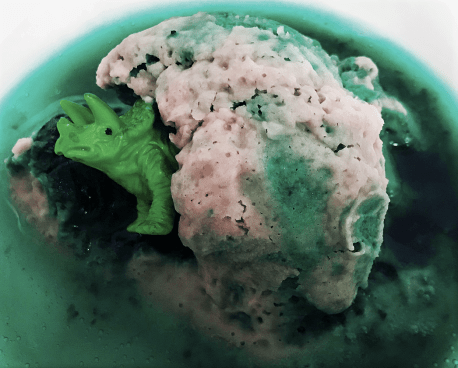
Hatch Your Own Dinosaur Eggs


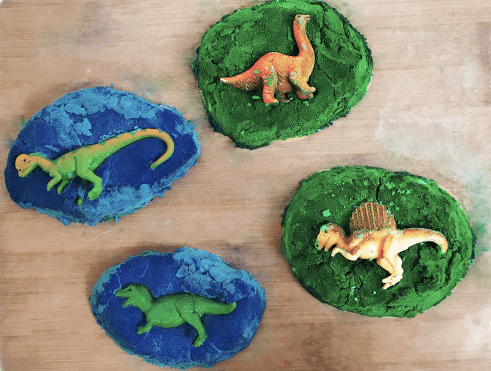
Think there are no more dinosaur eggs to be found? Think again! You can make your own with this easy craft that will have you hatching some T.-rex-size fun! All you need are a few simple ingredients!

celebrate-picture-books-picture-book-review-dinosaur-eggs-craft-open-eggs

Supplies

  • Old clothes or apron
  • Large box of baking soda (makes between 6 and 8 eggs)
  • Food coloring
  • Water
  • Plastic dinosaur toys
  • Bowl
  • Fork
  • Spoon
  • Wax paper
  • Baking sheet
  • Foil
  • Vinegar
  • Spray bottle (optional)
  • Plastic or metal spoon, stick, popsicle stick, or other implement to chisel with
celebrate-picture-books-picture-book-review-dinosaur-eggs-craft-vinegar-egg-open-darker

Spray the egg with vinegar to hatch your dinosaur

Directions

  1. Wear old clothes or an apron
  2. Cover work surface with wax paper, parchment paper, newspaper, or other protection. Food coloring can stain some surfaces
  3. Pour baking soda into the bowl
  4. Add drops of food coloring in whatever color you’d like your eggs to be. The eggs will darken when baked.
  5. Mix in the food coloring with the fork. You may want to use your hands, too
  6. When the baking soda is the color you want it, begin adding water a little at a time
  7. Add water until the baking soda holds together when you squeeze it in your hand
  8. When the baking soda is the right consistency, spoon some out into your hand or onto wax paper
  9. Push one plastic dinosaur into the middle
  10. Cover the dinosaur with more of the baking soda mixture
  11. Carefully form it into an egg shape
  12. Repeat with other dinosaurs
celebrate-picture-books-picture-book-review-dinosaur-eggs-craft-chiseled -darker

Chisel the egg open to hatch your dinosaur

To Bake the Eggs

  1. Set the oven or toaster oven to 200 to 225 degrees
  2. Set the eggs on a baking sheet lined with foil
  3. Bake the eggs for 15 minutes, check
  4. Turn the eggs over and bake for 10 to 15 more minutes
  5. Remove from oven and let cool

To Hatch the Eggs

  1. Eggs can be hatched by chiseling them with a spoon, stick, or other implement
  2. Eggs can also be hatched by spraying or sprinkling them with vinegar

You can purchase Our Prehistoric Planet: Dinosaurs and Other Creatures of the Past from these booksellers

Amazon | Barnes & Noble | Bookshop

Picture Book Review
March 25 – National Reading and March into Literacy Month

About the Holiday

All month long, we celebrate reading—and writing! This focus on literacy spotlights the importance of reading with your children early—even from birth. Reading with your kids helps them develop language and writing skills that will promote future success in school and beyond. Even if your child isn’t talking yet, as you read to them they’re listening and learning about their language, how it sounds and looks on a page. The rich experience in today’s two board books, which combine reading, critical thinking, and fine motor skills, can get you and your little one started on a lifetime of learning. 

Ready for Mazes: Baby Animal Mazes

By Susann Hoffmann


Little ones can’t get enough of baby animals! They squeal in delight when they see tiny ducks, bunnies, and other small animals and just want to pet or be near them. Baby Animal Mazes gives the youngest readers a hands-on chance to help baby animals navigate winding paths while avoiding obstacles to find their family, play games, and complete other fun challenges.

Each visually rich and adorable puzzle introduces a baby animal with a sweet storyline involving family, friends, or a favorite treat. But there’s a catch! In each maze, important parts of the path are missing. Here’s where young readers can help the baby animal cross the two-page spread to their goal by finishing the path. To do this, three sturdy, round disks printed with a section of path (straight-away, intersection, or curve) are provided on the first page. These fit snugly into circles where the path is broken. Children will have fun finding the right piece and how it fits to complete the path. A range of difficulty—from one missing piece to three—offers a challenge and increasing confidence.

Little readers will be enchanted with Susann Hoffmann’s vibrant and charming images of wildlife that are just waiting to be named, counted, or found in an impromptu “I-spy” game. Textured pages keep little fingers on the paths and offer a sensory experience while reading.

With just the right amount of challenge for little ones, plenty of repeat play and readability, and a large, durable format, Baby Animal Mazes will be a favorite go-to book on any young child’s bookshelf. The book makes a perfect take-along activity and gift.

Ages 2+

Twirl, 2026 | ISBN 978-2408061951

Susann Hoffmann is a freelance illustrator and animator. Her work can be seen in various digital media, books, and film. She lives in Hamburg, Germany. Visit her at susannhoffmann.com.

You can purchase Ready for Mazes: Baby Animal Mazes from these booksellers

Amazon | Barnes & Noble | Bookshop

Where Are You, Baby?

By Elena Selena


Sweet endearments, loving looks, and cuddly togetherness makes this interactive board book a perfect companion for snuggly story times with your baby or young child. “Where are you, little one?” mother and father animals ask, and children will love lifting the intricately cut lion, hedgehog, parrot and other flaps to discover the babies underneath. “Here I am!” they eagerly answer. Lifting the babies’ flaps in this well-designed book bring them close to mom or dad so they can have fun exploring, flying, and more together.

Elena Selena infuses her bold, colorful illustrations with all the heart of parenthood, drawing the eyes of both adult and baby animals so that they are always looking at each other with affection and, in many, outstretched arms are ready for hugs. 

Moms and dads will cherish sharing this book with their little ones. It’s sure to become a favorite for bedtime or playtime at home or for entertainment while out at the park, beach, or anywhere waiting is expected. Where Are You, Baby? would make a much-loved addition to home bookshelves as well as a gift for baby showers or new babies. 

Ages Baby – 4

Twirl, 2026 | ISBN 979-1027613892

Born in Lithuania, Elena Selena initially trained at the Vilnius Academy of Arts before discovering her talent for making pop-up books at the École Estienne (ESAIG) in Paris. She now splits her time between illustration and pop-up projects, and conducts pop-up workshops for children as well. She lives in Paris, France. Visit her at elenaselena.com.

You can purchase Where Are You, Baby? from these booksellers

Amazon | Barnes & Noble | Bookshop


March 24 – National Agriculture Day

About the Holiday

Established in 1973 by the Agriculture Council of America (ACA), National Agriculture Day raises awareness about the importance and wide reach of farming to help people understand how much agriculture contributes to the economy and daily life—from the food we eat to the clothes we wear​ to the products we use. Today, we celebrate the farmers, ranchers, and all farm workers involved in producing the food, clothing, and even the biofuels we rely on every day.

This year’s theme is Together We Grow and includes activities like farm tours and educational programs for kids​ that encourage younger generations to consider careers in farming​. The work of agriculture is always evolving. Today, farmers use technology to grow more food while protecting the environment. Such sustainable farming practices are a highlight of this year’s celebration​.

Thank you to Atheneum Books for Young Readers for sending me a copy of this book for review!

From the Fields to the Fight: How Jessica Govea Thorbourne Organized for Justice

Written by Angela Quezada Padron | Illustrated by Sol Salinas


Every summer morning before dawn four-year-old Jessica and her Mexican-American family joined other families in the fields to pick crops, earning only a few dollars a day while suffering hunger, physically punishing labor, and constant exposure to chemical pesticides. Jessica picked cotton, clipped grapes, and retrieved plums from the ground. As she got older, Jessica became more aware of the struggles in her community for whom education, housing, medical care, and equal treatment were denied “just because they were Latino.”

Illustration copyright © 2026 by Sol Salinas. Text copyright © 2026 by Angela Quezada Padron. Courtesy of Atheneum Books for Young Readers.

When her father joined other farmworkers to raise awareness of the unfair treatment and conditions, young Jessica joined him in passing out flyers door-to-door and paid close attention to the growing organization. Jessica was a born leader: beginning in childhood, she began speaking to crowds, learning to be persistent, and even organizing “other kids to petition for a neighborhood park.” 

When Jessica was a teenager, their burgeoning organization joined with the Agricultural Workers Organizing Committee, founded by Filipino farm workers, in a strike for higher pay against grape growers in Delano, California. When the grape growers hired other workers, leaving many farmworkers without a job, Jessica delayed going to college to further help the cause.

Illustration copyright © 2026 by Sol Salinas. Text copyright © 2026 by Angela Quezada Padron. Courtesy of Atheneum Books for Young Readers.

Grape boycotts in grocery stores followed the strikes, but many growers began shipping their grapes to other stores and even to Canada to avoid improving wages and conditions for workers. “Putting her fears aside to do what was needed for justice,” Jessica went to Canada with the union. For months she and her team protested at grocery stores and elsewhere, gaining the support of Canadian union workers and increasing numbers of shoppers who stopped buying grapes. Finally, the growers agreed to provide “higher pay, better working conditions, and medical care.” Throughout her life, Jessica Govea Thorbourne continued to stand up for equality, empowering people of all ages to organize and create impactful change and “showed that making a difference can start with just one child.”

Back matter includes a short biography of Jessica Govea Thorbourne’s life, a glossary, pointers on organizing for a cause, and a timeline of the events related in the text.

Illustration copyright © 2026 by Sol Salinas. Text copyright © 2026 by Angela Quezada Padron. Courtesy of Atheneum Books for Young Readers.

Angela Quezada Padron writes a powerful biography of Latina activist Jessica Govea Thorbourne, who even as a child made an impact within her family and for her community of farm workers. Through Thorbourne’s example, Padron empowers today’s children to speak out and act when they see or experience injustice and shows them that with determination, passion, and persistence they can influence others and create necessary change. Quezada Padron’s straightforward text clearly outlines the growth of the labor unions in a way that children can understand while also spotlighting Jessica’s emotions, character, and contributions in single, stand-alone sentences sprinkled throughout the pages that will resonate with young readers.

Sol Salinas’s richly hued, layered illustrations take readers from the hot, sun-drenched fields to Jessica and her father’s door-to-door rallying to union meetings and protests to a victory celebration. The workers’ struggles are evident in their facial expressions. One potent image captures 21-year-old Jessica volunteering to join the protesters in Canada, leaving behind her family and everything familiar. Children may enjoy following and talking about the wispy, symbolic vine that emanates from a seed in Jessica’s hand and wends its way from the front cover and page to page, connecting Jessica to her life’s work and community.

Ages 4 – 8

Atheneum Books for Young Readers, 2026 | ISBN 978-1665946704

Angela Quezada Padron is a Latina author-illustrator who spent her childhood days writing stories and doodling on the garage walls of her New Jersey home and her summers visiting family in the Dominican Republic. In addition to writing From the Fields to the Fight: How Jessica Govea Thorbourne Organized for Justice, she is the author-illustrator of As the Seas Rise: Nicole Hernández Hammer and the Fight for Climate Justice. She won first place in the Portfolio Showcase at the 2023 Florida SCBWI Conference and was a semifinalist for the SCBWI Tomie dePaola Award in 2014. Visit her at AngelaPadron.com.

Sol Salinas is a non-binary artist from San Antonio, Texas. At a young age, they fell in love with history while watching old Hollywood movies with their grandmother. When they aren’t drawing, Sol can usually be found playing Dungeons & Dragons, collecting rose quartz, drinking warm cups of tea, and listening to their favorite music: Fleetwood Mac. Find more at SolSalinasIllustration.com.

You can purchase From the Fields to the Fight: How Jessica Govea Thorbourne Organized for Justice from these booksellers

Amazon | Barnes & Noble | Bookshop

Picture Book Review
March 23 – National Gardening, Nature, and Ecology Books Month

About the Holiday

Established by The Children’s Book Council in the early 2000s, Gardening, Nature, and Ecology Books Month invites everyone to explore gardening and the wonders of the natural world through reading about these topics through books of all kinds. With their combination of compelling storytelling and beautiful illustrations, picture books are especially adept at revealing the beauty of the environment, the intricate connections of ecology, and the rewards of gardening. This month-long holiday encourages people to not only read about the environment but to get involved in the type of stewardship that will help create a greener and more sustainable world. Today’s book offers a beautiful example!

Thank you to Greystone Books and Deborah Sloan for sending me a copy of this book for review!

Aya Has Never Seen a Bear

Written by Gerelchimeg Blackcrane | Illustrated by Jiu’er | Translated by Paul Qiao | Adapted by Helen Mixter


As readers enter the story they get a bird’s-eye view of Aya and her grandma and grandpa’s camp. Aya and her family are Oroqen, an ethnic group of hunters who live in the forests and mountains of Greater and Lesser Khingan, in northern China. Grandma is tending the fire outside their curonko, the tent where Aya still sleeps, while their dogs wait patiently and their horses graze nearby. Grandpa has just returned with breakfast and plans for the day.

Illustration copyright © 2026 by Jiu’er. Text copyright © 2026 by Gerelchimeg Blackcrane. Courtesy of Greystone Kids.

At last, Aya will have a chance to view bears in the woods. She has seen many other animals, but never a bear. Aya rides her horse slowly and quietly through the autumn woods as Grandpa has taught her. Aya spies various animals, and deeper in the woods the shadow of an eagle owl sends the two riders hurrying on to the wetlands. When Aya and her grandpa come to the river valley, they hide behind bushes on the riverbank, remaining completely still as they watch for bears in the pine woods on the other side. There they see an abandoned mattress surrounded by garbage. When a mother bear and three cubs come into sight, Aya holds her breath, knowing “in the northern forest, bears are unbeatable. They are pure power.” The bears frolic and snooze on the mattress. Finally, Grandpa whistles, and they scurry away.

Illustration copyright © 2026 by Jiu’er. Text copyright © 2026 by Gerelchimeg Blackcrane. Courtesy of Greystone Kids.

Grandpa and Aya then burn the mattress and other trash to dissuade the bears from interacting with humans “This is how the Oroqen share the forest with bears. Respect them, be in awe of them, and keep away from them.” When the fire is completely out, they head home, picking berries along the way. Winter, with its deep blanket of snow, will come soon enough. Then Aya will dream about the bears while they hibernate until spring.

Back matter provides more information about the Oroqen and their traditions.

Illustration copyright © 2026 by Jiu’er. Text copyright © 2026 by Gerelchimeg Blackcrane. Courtesy of Greystone Kids.

Gerelchimeg Blackcrane’s story, beautifully translated by Paul Qiao, flows with the gentle rhythms of a mountain stream, carrying readers along on Aya’s and her grandfather’s trip to view bears in the wild. Through their actions, Aya and her grandpa demonstrate how humans can live in harmony with nature, respecting its autonomy while also enjoying and using its gifts—guiding principles of ecology. Lovely passages of lyrical description dazzle, drawing readers into the lives not only of Aya’s family but of the plants and animals of the forest and the patterns of the changing season.

Jiu’er’s rich illustrations, rendered in mineral pigments, glow with the woodland hues of autumn. Panoramic views of the mountains and river valley are breathtaking, and each page offers a plethora of details that will delight children. They may be especially interested in Grandpa’s hat that helps him and Aya remain camouflaged. Readers will be awed by the image of the eagle owl and the nearly two-page spread of the bears napping together.

A wondrous, quietly affecting story of family and peaceful coexistence with nature, Aya Has Never Seen a Bear is highly recommended for all library collections and would make an eloquent addition to home bookshelves for tranquil bedtime or story time reading.

Ages 4 – 8

Greystone Kids, 2026 | ISBN 978-1778403064

Gerelchimeg Blackcrane is an award-winning Chinese Mongolian writer of natural literature and a breeder and trainer of native Chinese mastiffs. He has published many novels, including Black FlameGhost DogBlack Dog HaranohaiWolverine RiverBlood ColtSmoke from Wolf Valley, and Six Seasons of Reindeer. He has collaborated with Jiu’er on picture books, including The Moose of Ewenki, another story of a traditional people of Inner Mongolia, also published by Aldana Libros. His works have been translated into more than ten languages and sold internationally, exported abroad, with a wide readership of children and adults. He currently lives in the Hulunbuir grassland in Inner Mongolia.

Jiu’er is an award-winning sculptor and picture book writer and the first female Chinese artist to be featured in the Honor List of the International Board on Books for Young People (IBBY). She lives in Beijing, China, along with her Mongolian hunting dog, whose name is Huhe.

You can purchase Aya Has Never Seen a Bear from these booksellers

Amazon | Barnes & Noble | Bookshop

Picture Book Review


March 20 – International Day of Happiness

About the Holiday

International Day of Happiness celebrates happiness around the world, supporting this important sense of wellbeing no matter how it is measured. While in its recognition of the holiday, the United Nations focuses on economic, human rights, environmental, peace, and social initiatives, including these 17 Sustainable Development Goals, we are all invited to find happiness in ways that are meaningful to us and spread that joy to others. One way to find lasting peace and happiness is to embrace the connectedness of all things and our place in the world alongside our family and neighbors and within all aspects of nature. Today’s book was written for children, but its message is true and offers happiness for all ages.

Thank you to Abrams Books for Young Readers for sharing a digital copy of this book with me!

The Animals Speak: The Lakota Way / Wamákashkaŋ’iya: Lakhól Wichóh’aŋ Kiŋ

By S. D. Nelson | Translated by Dakota Goodhouse


“If you look with your eyes and listen with your ears, our animal relatives will share their ancient wisdom with you. A spirit line connects us as we journey together.” 

With this welcome to explore the world, S. D. Nelson Maȟpíya Kiny’An (Flying Cloud), Hunkpapa Lakota and a member of the Standing Rock Sioux Tribe, invites young readers to look to nature and embrace the lessons that “the wild ones”: “the Four-leggeds and the Winged beings of the air . . . the little Creepy-crawlies, the Water-beings, and the Green, Growing Things” have to impart to us “Two-leggeds” from their vast histories and experiences in sharing this world. In Lakota tradition, each member of nature can inspire us every day to live with the curiosity, courage, heart, humor, and values that help us along our life’s journey while connecting us to each other and the environment.

Text and illustration copyright © 2026 by S. D. Nelson. Courtesy of Abrams Books for Young Children.

Beginning with “Buffalo Tatánka (tah-TAHN-kah),” that storied animal that once freely roamed the prairies, Nelson writes, “Buffalo is strong. In times past, we used his hide to make our clothes and tipis. Buffalo gave his life and nourished our people. Today, he guides us to SHARE and BE GENEROUS.” With her playfulness, “Otter Ptán (p’TAHN) . . . reminds us that SMILES and LAUGHTER are good for our hearts,” while “Butterfly Kimímela (kee-MEE-may-lah). . . shows us that CHANGE IS GOOD and to open ourselves to NEW WAYS.” Others remind us to keep our wits about us lest we be led astray by tricks or into danger, while still more speak to inspiration, insight, and new perspectives. 

Text and illustration copyright © 2026 by S. D. Nelson. Courtesy of Abrams Books for Young Children.

Following the story, Nelson reverently and poignantly discusses Lakota traditions and beliefs about the spirit line and the all-encompassing, yet incomprehensible force “Wakán Tánka (wah-KAHN TAHN-kah)—the Great Mystery” that connect humans, animals, plants, and all aspects of nature as we journey together through life.

Nelson accompanies his lyrical text with illustrations of soft mottled and blended natural hues of acrylic paint that, as Nelson explains in his Author’s Note,  “. . . are inspired by traditional Lakota pictographs and ledger-book drawings, with their bold use of line, shape, and color. My Indigenous ancestors painted on animal skins, their tipis, their horses, and even their own faces. We still do! These stylized images include natural forms as well as abstract symbols.” Each page invites readers to linger to absorb and talk about all of the stunning imagery. 

Text and illustration copyright © 2026 by S. D. Nelson. Courtesy of Abrams Books for Young Children.

The Animals Speak is a book that will change the way you look at the world—it’s animals, plants, people, and nature in general. While reading, one can feel—like a hug—the peace of interconnectedness, a happy perspective that can be incorporated into everyday life. This is a book to treasure and is a must for public, school, and classroom libraries as well as home bookshelves. It would also make a wonderful and much-loved gift.

Ages 4 – 8+

Abrams Books for Young Readers, 2026 | ISBN 978-1419764448

S. D. Nelson, Maȟpíya Kiny’An (Flying Cloud), is a member of the Standing Rock Sioux Tribe in the Dakotas and the author and illustrator of inspiring children’s books that celebrate Lakota and Indigenous cultures. Awards include an American Indian Library Association Honor Book, an ALA Robert F. Sibert Honor, and two Spur Awards from Western Writers of America. His original paintings are held in many national collections, including the Smithsonian Institution’s National Museum of the American Indian, Little Bighorn Battlefield National Monument, South Dakota State Historical Society, the Crazy Horse Memorial and State Historical Society of North Dakota. He lives in Cottonwood, Arizona. Visit him to see his many books and his art at sdnelson.net.

International Day of Happiness Activity

CPB - Happiness typography

Happiness Is . . . Game


Happiness is all around you! Grab one or more friends to play a game that reveals what things make you happy. Here are two ways to play and two possible endings for each game. Choose the one that will lead to maximum happiness for all! 

  1. Like the “Geography” game: the first player names something that makes them happy, the next player must think of something that starts with the last letter of the word the previous player said. The game continues with each player continuing the pattern. Players drop out as they cannot think of a word. The last player left is the winner. Or set a time frame to play and name no winner.
  2. Within a certain time limit (depending on age), players must think of something that makes them happy. Players drop out if they cannot think of a word within the time limit. The last player left is the winner. Or set a time frame to play and name no winner.

You can purchase The Animals Speak: The Lakota Way / Wamákashkaŋ’iya: Lakhól Wichóh’aŋ Kiŋ from these booksellers

Amazon | Barnes & Noble | Bookshop

Picture Book Review